The Complete Guide toOrganic Chickpea Sourcing
Article contents
Chickpeas are among the fastest-growing commodities in North America. Here's how to navigate certifications, origins, and quality specs when sourcing at scale.
Explore the material index01Why Chickpeas Are Dominating the Commodity Market
The global chickpea market has experienced unprecedented growth over the last five years, driven primarily by increasing demand for plant-based protein in North America and Europe. As buyers and importers look to scale their sourcing operations, understanding the nuances of origin, certification, and quality grading becomes critical.
02Understanding Varieties: Kabuli vs. Desi
There are two main commercial varieties of chickpeas:
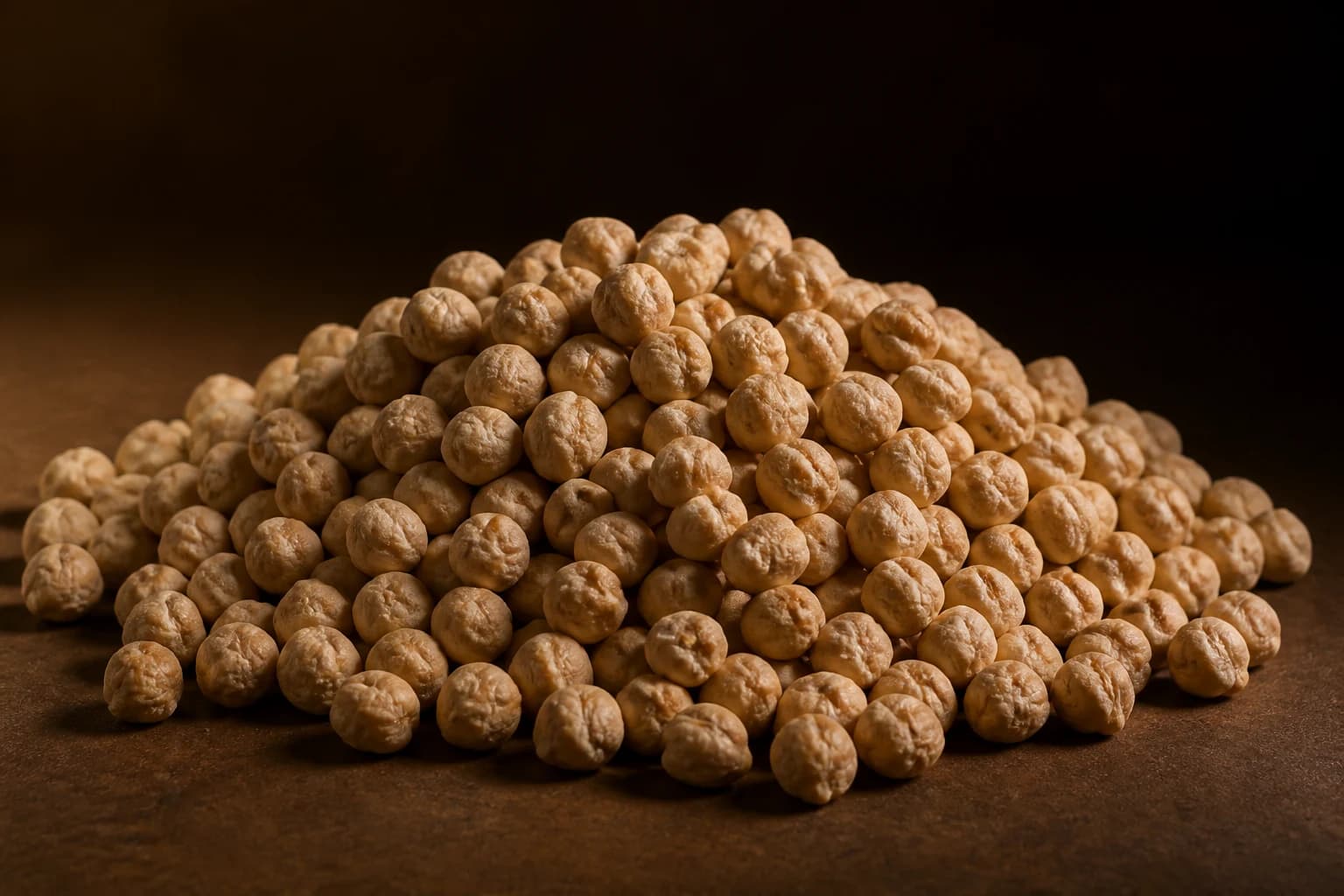
Kabuli Chickpeas are the large, cream-colored beans most common in the North American market. They are prized for their uniform appearance and mild flavor, making them ideal for retail salads, canning, and foodservice applications. Key size grades include 8mm, 9mm, and 10mm.
Desi Chickpeas are smaller, darker, and have a more intense, earthy flavor. They are primarily used in flour production (besan), split peas (chana dal), and traditional South Asian dishes. They represent a growing export category for the specialty foods sector.
03Top Origins and What to Expect
Mexico (Sinaloa & Sonora)
Mexican Kabuli chickpeas are among the most sought-after globally due to the region's ideal desert climate and controlled irrigation systems. The harvest season runs from March to May. Mexican origin offers excellent consistency and is well-suited for NOP (USDA Organic) and LPO certified production.
Argentina
Argentina is the world's largest exporter of chickpeas. Argentinian Kabuli tends to be highly competitive on price and offers excellent volume availability. The main harvest runs October to December.
04Certification: What You Actually Need
For the North American organic market, your supplier must hold at minimum:
- NOP (National Organic Program) — required for the US market label.
- LPO (Ley de Productos Orgánicos) — required if the origin is Mexico.
- Transaction Certificates (TCs) — issued per shipment to validate the organic chain of custody.
Always request the full certification package before confirming any commercial order. A reputable supplier will provide these upfront without hesitation.
05Quality Specifications to Know
When requesting a quotation, always specify:
| Parameter | Acceptable Range |
|---|---|
| Moisture | Max 14% |
| Protein | Min 18% |
| Purity | Min 99% |
| Admixture | Max 1% |
| Aflatoxins | Max 10 ppb |
06Working with Amberstone
At Amberstone, we source organic and conventional chickpeas directly from certified farms in Mexico and Argentina. Every shipment comes with a Certificate of Analysis (COA), phytosanitary certificate, and full organic transaction certificates. We offer FCL and LCL options with competitive CIF pricing to US and Canadian ports.
Ready to start a sourcing conversation? Our team responds within 24 business hours.